
Turn repetitive calls into a structured business workflow.
An AI calling system can make or receive business calls, understand customer responses, collect information, qualify opportunities, answer approved questions, and route conversations when human attention is needed.
Conversation, not just a recording
Unlike a simple recorded IVR, conversational voice automation can respond according to what the customer says. The workflow can ask the next relevant question, capture an answer, and determine the next action.
Lead Qualification
Collect location, budget, requirement, urgency, or other qualifying information before a sales callback.
Customer Follow-Up
Handle routine reminders and follow-ups consistently without requiring staff to manually call every contact.
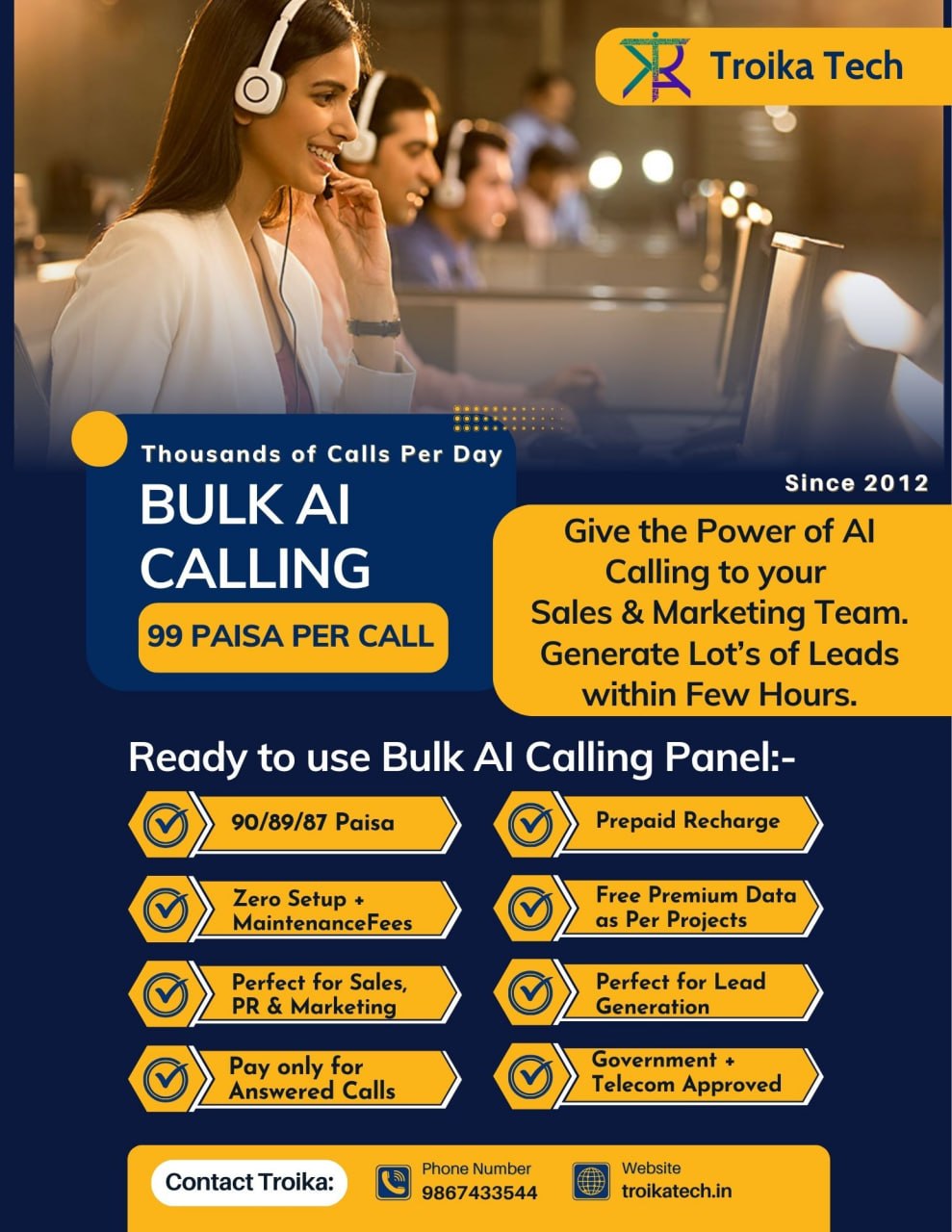
The objective is not simply to make more calls. It is to make routine conversations more consistent while giving employees more time for discussions that require judgement, expertise, or personal attention.
Where AI calling can create practical value.
Businesses with recurring conversations can begin with one clear process and expand only when the results justify additional automation. Common workflows include lead generation, qualification, appointment scheduling, reminders, surveys, feedback collection, and routine customer support.
Lead Qualification
Ask structured questions, identify genuine opportunities, and pass qualified prospects to sales teams.
Appointment Calls
Confirm appointments, send reminders through voice conversations, and capture callback requests.
Customer Follow-Ups
Automate repetitive post-enquiry conversations while maintaining a defined escalation path.
Support Conversations
Answer approved routine questions and route complex or sensitive conversations to staff.
From the first call to going live.
Troika Tech starts with your business process rather than forcing a fixed calling template. The workflow is mapped, tested against realistic conversations, connected to the required systems, and refined before launch.
Discover
Understand your audience, scripts, goals, FAQs, data, and escalation requirements.
Design
Build conversation logic, qualification rules, language handling, and human handoffs.
Test
Test interruptions, unexpected questions, mixed languages, and real customer scenarios.
Launch
Go live, monitor conversations, improve the workflow, and provide ongoing support.
Designed for real conversations
Real callers rarely follow a script perfectly. They interrupt, change requirements, ask unexpected questions, switch languages, or request a human representative. Testing these situations helps make the workflow more dependable before important customer interactions are automated.
- Business-specific conversation logic
- CRM and workflow integration
- Defined human escalation
- Multilingual conversation planning
- Call outcome tracking
- Ongoing workflow refinement
Built around Kolkata's customer-facing businesses.
Kolkata combines established commercial areas with expanding business districts. From Salt Lake Sector V and Rajarhat to customer-facing businesses across the city, companies often need consistent enquiry handling, follow-ups, and appointment communication.
Real Estate
Property businesses in Rajarhat and surrounding growth corridors can qualify enquiries, confirm site visits, capture budgets, and identify prospects ready for a sales conversation.
Education & Training
Coaching centres, colleges, and training providers can automate course enquiries, counselling appointments, admission reminders, and parent or student follow-ups.
Healthcare & Local Services
Clinics, diagnostic services, and appointment-based businesses can manage confirmations, reminders, routine enquiries, and callback requests while routing sensitive conversations to staff.
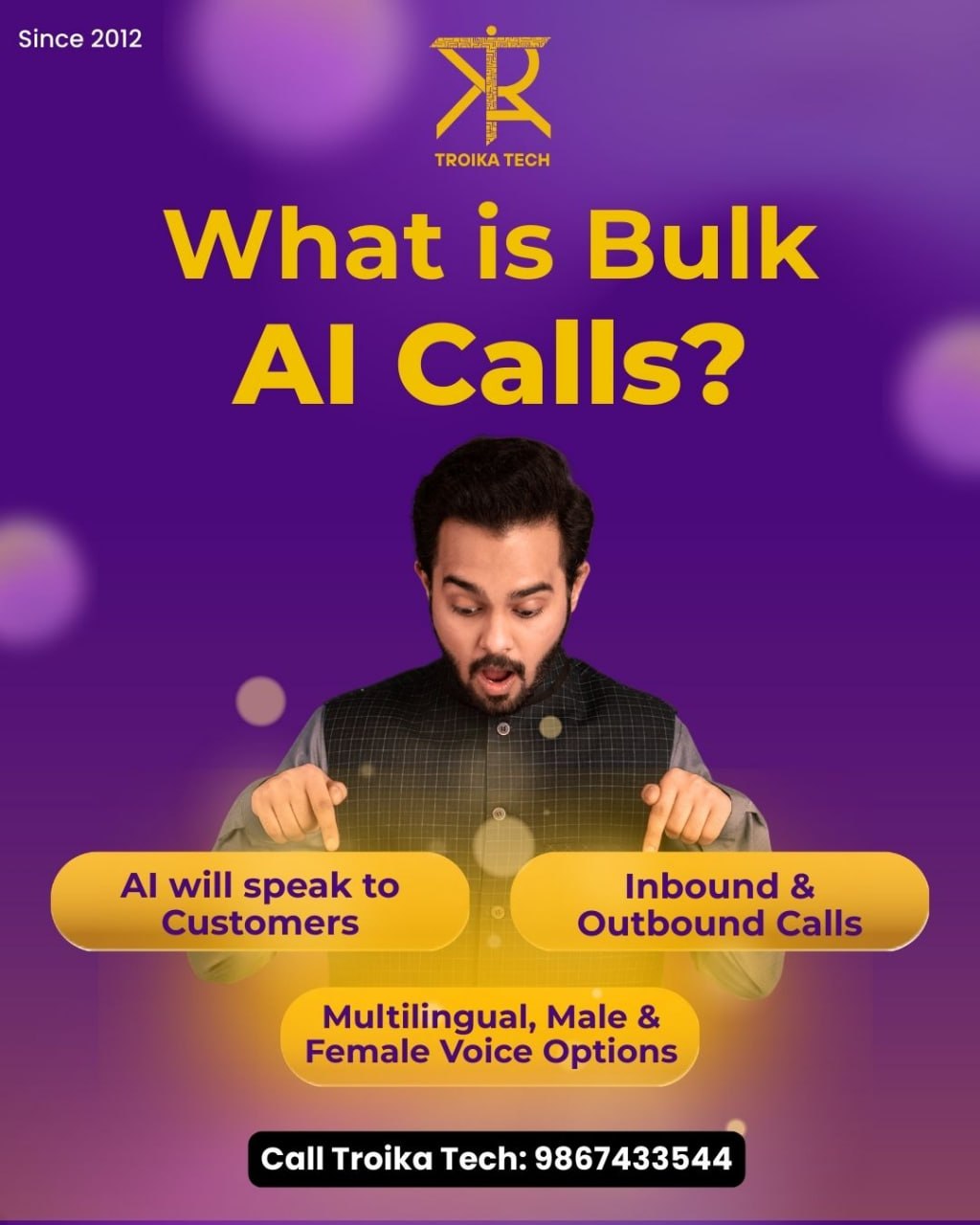
Questions businesses ask before automating calls.
An AI Calling Agency builds and manages automated voice systems that can make or receive business calls using conversational AI. Unlike a simple recorded IVR, an AI calling system can understand a customer's response and continue a conversation based on the information provided.
For example, a real estate business could receive a new enquiry and automatically call the prospect, ask about preferred location and budget, identify the type of property required, and record the response. If the prospect wants a human discussion, the workflow can transfer or schedule a callback for a sales representative.
An AI calling solution can support lead generation, lead qualification, appointment scheduling, reminders, customer follow-ups, surveys, feedback collection, and routine support conversations. The exact workflow depends on the business process and the information the AI is allowed to handle.
Kolkata has a diverse business environment covering technology, professional services, retail, healthcare, education, real estate, hospitality, and other customer-facing sectors. Businesses often receive enquiries outside normal office hours or need to follow up with leads faster than a small sales or support team can manage manually.
Voice is also important when customers want clarification rather than another form or message. A customer looking at a property, asking about a course, confirming an appointment, or requesting a service may find a conversation easier than navigating several digital screens.
For Kolkata businesses, multilingual communication can also matter. Depending on the customer group, conversations may naturally move between Bengali, Hindi, and English. A properly configured AI calling workflow can be designed around those language requirements and the way the business actually communicates with customers.
The goal is not simply to make more calls. It is to make routine calling more consistent while allowing employees to spend more time on conversations that require judgement, expertise, or personal attention.
AI calling is particularly useful for businesses with recurring calls, large enquiry volumes, follow-up-heavy sales processes, appointment workflows, or customer information that can be collected through structured conversations.
Real estate teams can use it for lead qualification and site-visit follow-ups. Education businesses can automate course enquiries and admission reminders. Healthcare and appointment-based services can handle confirmations and routine reminders. Travel, hospitality, financial services, local retailers, and professional service providers may also benefit when voice communication is already an important part of their customer journey.
The strongest use case is usually a repetitive process with a clear objective. If every call requires complex judgement from the beginning, the right approach may be AI-assisted calling with a clear human handoff rather than complete automation.
AI calling costs depend on the number of calls, call duration, languages, voice technology, integrations, CRM requirements, workflow complexity, and the level of ongoing support required. A small follow-up workflow and a multi-stage customer service system should not be treated as the same project.
The value should therefore be measured against business outcomes rather than only the cost per call. Useful measures include qualified leads, completed follow-ups, appointment bookings, response rates, staff time saved, customer resolution rates, and revenue generated from qualified opportunities.
Troika Tech can structure the system around the specific workflow you need instead of adding unnecessary functionality. This makes it easier to start with a focused use case, measure its results, and expand the system when there is a clear business reason to do so.
The timeline depends on the complexity of the workflow. A straightforward calling process with an existing script, limited integrations, and a clearly defined objective can move from discovery to testing relatively quickly. More complex systems involving CRM integration, multiple languages, custom business rules, call routing, analytics, or human escalation require additional testing.
Troika Tech begins by mapping the actual customer journey. The team then defines the conversation flow, prepares the knowledge and call logic, connects required systems, tests different customer responses, and makes adjustments before launch.
Testing is particularly important because real callers do not always follow a script. They may interrupt, ask unexpected questions, change their requirements, speak in mixed languages, or request a human representative. The system should be tested against these situations before being relied on for important customer interactions.
Troika Tech approaches AI calling as a business workflow rather than simply a voice technology installation. The focus is on what the call needs to accomplish, what information must be collected, when a human should take over, and how the resulting data should reach your team.
You get practical customization around your scripts, customer journey, business rules, integrations, and reporting requirements. Troika Tech can also help refine the workflow after launch using actual conversation patterns and operational feedback.
For Kolkata businesses, this approach is useful when customers expect clear communication and may switch naturally between Bengali, Hindi, and English. The system can be designed around your target audience while keeping important or sensitive interactions available for human handling.
The objective is a reliable calling process that supports sales and service teams without forcing your business into a rigid, generic workflow.
Where voice automation fits in 2026.
AI adoption is moving from experimentation toward practical customer operations. Voice remains useful when customers need clarification, reminders, qualification, or a direct route to a business. The important consideration is how the technology fits the workflow and where human oversight remains necessary.
In 2026, surveyed consumers in Indian business-calling research preferred receiving voice calls from businesses.
In the same research, surveyed businesses cited customer avoidance of unrecognised numbers as a major calling barrier.
Recent Indian service-industry research indicates that surveyed Indian teams use multimodal AI.
Industry adoption trends show a shift toward practical AI deployment with human oversight for complex interactions.
Technology should support the process, not complicate it.
Troika Tech builds AI calling workflows around measurable business outcomes: qualification, appointment booking, follow-up completion, customer support, routing, and operational efficiency.
Outcome-Focused Automation
Calling workflows are designed around measurable objectives instead of adding automation without a clear business purpose.
Practical Customization
Conversation flows, qualification rules, FAQs, escalation paths, integrations, and language requirements can be adapted to your actual customer journey.
Continuous Improvement
After launch, conversation patterns and operational feedback can help identify drop-offs, unclear questions, and opportunities to improve the workflow.
| Business Requirement | AI Calling Workflow | Human Escalation |
|---|---|---|
| Routine qualification | Yes | Available |
| Appointment reminders | Yes | Available |
| Complex customer decisions | Route | Yes |
| Sensitive conversations | Route | Yes |

Build a calling workflow around how your Kolkata customers actually communicate.
Start with one clear use case, define the desired business outcome, and build the automation around your customer journey. Troika Tech can help map the workflow from initial enquiry through qualification, follow-up, escalation, and reporting.
Plan Your AI Calling Workflow