
A voice agent that can understand, respond and act.
A Voice AI Agent is an AI-powered system that can speak with customers over the phone, understand what they say, respond conversationally, and perform defined business actions.


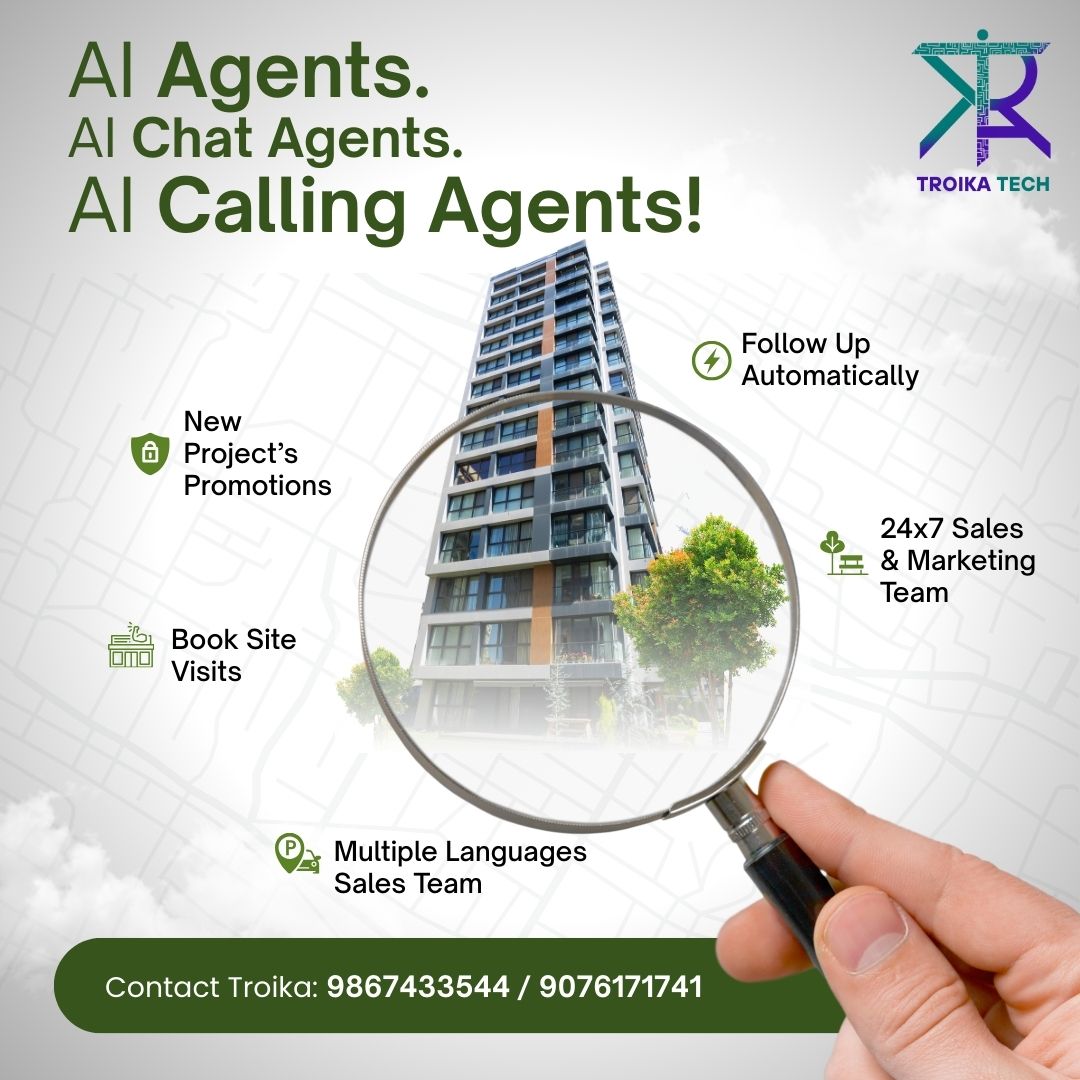
Conversation becomes a business workflow


The agent can connect with CRMs, calendars, ticketing platforms, databases, or internal APIs. That makes the voice experience useful beyond simply answering a telephone call.


Natural conversations
Customers can describe what they need instead of navigating rigid menu trees.
Defined actions
The system can collect information, trigger workflows, schedule requests, or escalate.
Built for the way Chennai businesses actually operate.
Chennai has a strong mix of SaaS, IT services, healthcare, automotive, fintech, hardware manufacturing, and customer-facing service businesses.
A company operating around Guindy may receive supplier, service, recruitment, and customer calls, while a technology business along the OMR and Taramani corridor may handle frequent B2B enquiries, demo requests, support questions, and lead calls.
Inbound enquiries
Answer common questions immediately and identify why each caller is reaching you.
Lead qualification
Collect the information sales teams need before passing high-intent opportunities forward.
Appointments
Handle booking requests and capture preferred dates, times, services, or callback details.
Human escalation
Move complicated, sensitive, or high-value conversations to the appropriate employee.
Local conversations need local context
Chennai customers may naturally switch between Tamil and English depending on the situation. A useful voice AI implementation accounts for that communication pattern instead of forcing every caller through one rigid language experience.
- Tamil and English conversation flows
- Business-specific terminology
- Defined escalation rules
- CRM and calendar integration
- Structured lead capture
- Call outcome monitoring
From first call to a working AI agent.
Troika Tech starts with the business process, then builds the voice layer around it. This keeps the implementation focused on what the agent needs to accomplish rather than making the technology itself the objective.
Understand
Map call flows, customer questions, systems, rules, and goals.
Build
Configure the agent, knowledge base, conversation logic, and integrations.
Launch
Deploy, monitor results, and refine the experience using real call patterns.

Where voice automation creates practical value.
Clinics and healthcare providers
Handle appointment requests, basic service questions, follow-ups, and call routing so reception teams can focus on patients who need human attention.
Automotive and manufacturing
Manage enquiries around dealers, service appointments, parts, quotations, customer support, and operational callbacks across Chennai's industrial ecosystem.
SaaS, IT and service companies
Capture website and phone leads, qualify prospects, answer product questions, schedule demos, and transfer high-intent opportunities to sales teams.
Clear answers before you automate calls.
A Voice AI Agent is an AI-powered system that can speak with customers over the phone, understand what they say, respond conversationally, and perform defined business actions. Unlike a basic IVR that mainly routes callers through numbered menus, a voice AI agent can interpret natural-language requests. For example, a Chennai healthcare business could use one to answer questions about departments, collect appointment preferences, confirm basic details, and transfer urgent or complicated conversations to staff. A service company could use it to qualify enquiries and book callbacks. The agent can connect with business systems such as CRMs, calendars, ticketing platforms, databases, or internal APIs. This makes it more useful than simply placing an automated voice on top of an existing phone number.
Chennai businesses often serve a broad customer base across the city and beyond, while operating across different working hours and communication preferences. A voice AI solution can provide consistent first-line call handling without requiring an employee to answer every routine enquiry. The local context also matters. A business near Guindy's industrial and commercial ecosystem may receive supplier, service, recruitment, and customer calls, while companies along the OMR and Taramani corridor may handle high volumes of technology and B2B enquiries. Chennai Metro's network itself connects commercial and corporate areas including Guindy, Taramani, and Sholinganallur. For customer-facing businesses, supporting both English and Tamil conversations can also make the experience more natural for callers. The objective is not to replace useful human interaction; it is to prevent employees from spending valuable time answering questions that can be handled reliably by automation.
A voice AI agent is most useful when a business receives repeated phone enquiries, has limited support staff, loses leads outside working hours, or needs faster qualification and routing. Typical use cases include lead qualification, appointment booking, customer support, follow-ups, and call routing. The right use case is not simply “automate calls.” It is identifying where automation can reduce response time, improve consistency, or increase the number of enquiries your team can process.
There is no sensible single price for every voice AI project. Cost depends on call volume, conversation complexity, languages, integrations, telephony requirements, security needs, custom workflows, and the amount of ongoing optimisation required. A simple FAQ and call-routing agent is fundamentally different from an AI system that qualifies leads, updates a CRM, schedules appointments, retrieves customer information, and transfers calls based on business rules. The better way to evaluate value is through measurable business outcomes: calls handled automatically, leads captured, appointments booked, response time reduced, staff hours saved, and qualified opportunities generated. Troika Tech can design the implementation around these metrics rather than selling automation for its own sake.
The timeline depends mainly on scope. A focused agent with a defined call flow can move considerably faster than a system requiring multiple integrations, complex business rules, multilingual behaviour, or extensive testing. Troika Tech typically starts by documenting the customer journey and identifying the calls that should be automated. We then build the conversational logic, connect required systems, test common and difficult scenarios, and deploy with monitoring. A practical rollout is often better than trying to automate every possible conversation on day one. Starting with a high-volume use case lets the business measure results, identify failure points, and expand the agent based on real call data.
Troika Tech focuses on the complete business workflow, not just the voice interface. That means understanding what should happen before, during, and after a customer call. The team can tailor the agent's conversation logic, integrate it with existing business systems, define human escalation rules, support relevant languages, and refine the experience using actual performance data. This matters because a voice agent that sounds natural but cannot complete the required business action has limited commercial value. Troika Tech also approaches deployment with practical metrics in mind: successful call resolution, lead quality, booking completion, escalation rates, response times, and operational savings. That creates a clearer path from AI implementation to measurable business value.
Why voice automation is becoming commercially relevant.
The opportunity is growing, but adoption still requires sensible integration, clear business objectives, and measurable outcomes. The figures below provide broad 2026 context rather than promises about any individual implementation.
In 2026, research reported that around 55% of Indian respondents were willing to interact with a brand's AI agent.
Recent digital adoption trends indicate that around 60% of Indian consumers use AI for instant customer support.
Industry adoption in 2026 continues to emphasise integration, skills, infrastructure, and measurable ROI alongside automation.
Automation designed around outcomes, not novelty.
Business-first workflows
Troika Tech designs the agent around measurable objectives such as lead qualification, appointment conversion, support automation, and faster response.
Custom integrations
Voice workflows can connect with CRMs, calendars, APIs, databases, and escalation rules so the conversation can trigger an actual business action.
Scalable human-AI collaboration
Repetitive conversations can be automated while complex, sensitive, or high-value calls follow defined paths to the right human employee.
| Business priority | Voice AI approach | Outcome focus |
|---|---|---|
| More qualified leads | Structured qualification questions | Lead quality |
| Faster support | Automated first-line answers | Response time |
| More bookings | Appointment and callback workflows | Completion rate |
| Lower repetitive workload | Automation with escalation rules | Staff efficiency |
Find the calls your team should stop handling manually.
A practical voice AI project starts with one high-value conversation flow. Troika Tech can map that workflow, identify the right automation opportunities, and build toward a measurable business result without forcing every customer interaction into automation.
Discuss Your Use Case