
What a voice AI agent actually does
A voice AI agent is software that can conduct spoken conversations with customers over the phone. It listens to what the caller says, understands the intent, responds using natural language, and can perform predefined actions.
Those actions can include collecting contact details, qualifying a lead, answering frequently asked questions, scheduling a request, sending information into a workflow, or transferring a conversation to a human. Unlike a basic IVR that mainly asks callers to press numbers, a modern voice AI agent can work with more natural conversations.






Automation with a human handoff
The purpose is not to automate every conversation. The purpose is to automate predictable conversations and reserve human attention for enquiries that require judgement, negotiation, expertise, or personal support.
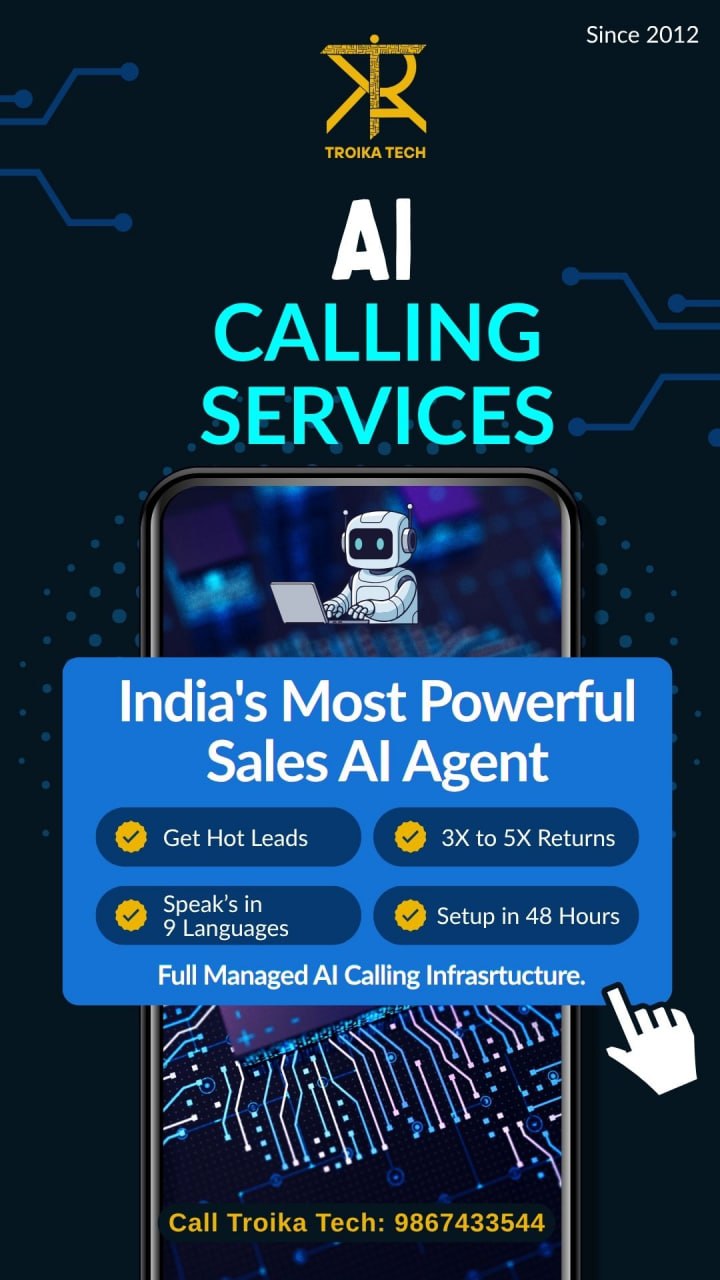
Why voice AI matters for businesses in Kota
Kota has a distinctive commercial environment. Its large education ecosystem operates alongside healthcare, hospitality, retail, manufacturing, tourism, and local services. That means businesses regularly receive enquiries that are repetitive but still need immediate answers.
Coaching centres around Talwandi and Vigyan Nagar, for example, may receive calls from students and parents asking about courses, batches, admission processes, timings, accommodation, or basic programme information. The same principle applies to hotels, clinics, diagnostic centres, retailers, travel businesses, and service providers.
A voice AI agent can handle the first layer of these conversations, collect useful information, and route qualified or sensitive enquiries to the right employee. That reduces repetitive call work while giving customers a more immediate response.
Student enquiries
Capture class, exam target, preferred course, and contact information before passing a serious admission enquiry to a counsellor.
Appointment requests
Handle routine clinic or service enquiries, collect requirements, and route appointment-related conversations through the appropriate workflow.
Booking questions
Answer approved questions about availability, timings, policies, and basic booking information for hospitality and local service businesses.
Lead qualification
Ask predefined qualifying questions so sales teams spend more time with leads that match their actual requirements.
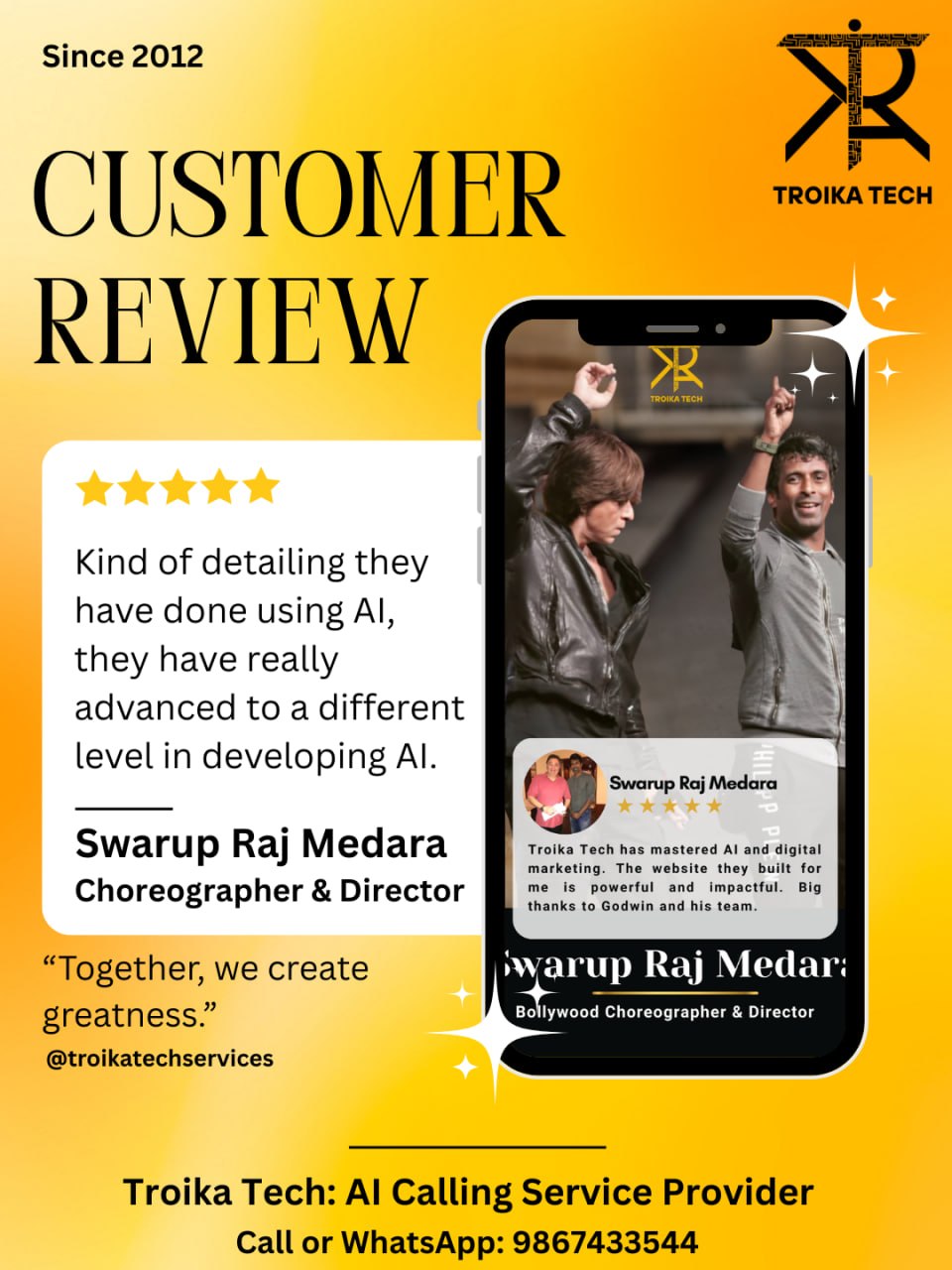
From first call to a live AI agent
Troika Tech treats voice AI as a business workflow, not just a voice interface. The system needs clear inputs, approved responses, escalation logic, and measurable outcomes before it goes live.
Understand
Map call types, FAQs, languages, goals, and business rules.
Build
Configure conversations, integrations, actions, and escalation paths.
Test
Run realistic scenarios before exposing the agent to customers.
Go Live
Launch, monitor interactions, and refine the workflow from real usage.
What gets defined before launch
A reliable agent should know what it can answer, what information it can access, what it must not claim, and exactly when a human should take over.
- Conversation objectives
- Frequently asked questions
- Lead qualification fields
- Human escalation rules
- Business operating logic
- CRM or workflow requirements
Businesses in Kota that can benefit
The strongest candidates are businesses where call volume is high, questions repeat, response speed matters, and employees lose time handling routine conversations.
Coaching & Education
Kota's education market creates constant enquiries from students and parents. Voice AI can capture requirements, answer approved questions, and route qualified admission leads to counsellors.
Healthcare & Clinics
Clinics, diagnostic centres, and healthcare businesses can automate routine appointment and information enquiries while keeping complex conversations with trained staff.
Voice AI Agent Company in Kota: FAQs
A voice AI agent is software that can conduct spoken conversations with customers over the phone. It listens to what the caller says, understands the intent, responds using natural language, and can perform predefined actions such as collecting contact details, qualifying a lead, answering FAQs, scheduling a request, or transferring the call. Unlike a simple IVR that mainly asks callers to press numbers, a modern voice AI agent can handle more natural conversations. The exact capabilities depend on the systems, business data, integrations, and rules connected to it. For a Kota business, this can mean handling routine conversations in the way customers actually speak, including Hindi, English, or common Hindi-English combinations. The goal is not to replace every human conversation. It is to automate predictable interactions and send higher-value or sensitive conversations to people.
Kota has an unusual business environment because its large education ecosystem sits alongside healthcare, hospitality, retail, manufacturing, tourism, and other services. The city has multiple situations where employees spend time answering the same questions repeatedly. Coaching centres may receive enquiries about batches, fees, timings, accommodation, or admission procedures. Hotels may receive booking questions. Clinics may receive appointment calls. A voice AI agent can absorb these repetitive conversations and operate beyond normal office staffing hours. That can improve response speed, reduce missed enquiries, and allow employees to concentrate on conversations that actually require human judgement.
Businesses with frequent inbound or outbound calls are the strongest candidates. Coaching institutes, educational consultancies, hospitals, clinics, diagnostic centres, hotels, real-estate businesses, retailers, travel companies, manufacturers with sales teams, and local service providers can all benefit. The clearest signal is not company size; it is call volume and repetition. If employees repeatedly answer the same questions, manually qualify the same leads, or lose enquiries because nobody is available, voice automation is worth evaluating. For example, a coaching business in Vigyan Nagar could use an AI agent to handle first-level student and parent enquiries, capture the student's class and exam target, and pass qualified prospects to an admissions counsellor. That is a specific workflow where automation can save staff time without eliminating the human role.
There is no sensible single price for every business. Cost depends on factors such as call volume, conversation complexity, languages, integrations, CRM connectivity, outbound calling requirements, analytics, and the level of customization required. The better way to evaluate value is to compare the system's cost against measurable operational outcomes. Consider how many calls employees currently handle, how many enquiries are missed, how much staff time goes into repetitive questions, and how many qualified leads require follow-up. Troika Tech can design the solution around the actual workflow instead of adding unnecessary features. For a smaller business, that may mean a focused FAQ and lead-capture agent. A larger operation may need CRM integration, appointment workflows, call routing, analytics, and multiple conversation paths.
The timeline depends on complexity. A focused agent with a limited set of FAQs and actions can be prepared faster than a system connected to CRM software, appointment platforms, databases, outbound campaigns, and multiple departments. Troika Tech begins by identifying the conversations that should be automated, defining what information the agent can access, establishing escalation rules, and mapping when a human must take over. The system is then tested using realistic scenarios before going live. The important part is not launching as quickly as possible; it is launching with predictable behaviour. A voice agent should know what it can answer, what it must not claim, when to ask another question, and when to transfer the caller.
Troika Tech focuses on practical business automation rather than deploying a generic voice bot and leaving the business to figure out the rest. We design the conversation around your actual customer journey, operational rules, lead process, and escalation requirements. Our approach combines voice AI development with workflow automation, integration, testing, and ongoing optimization. That matters because a useful voice agent is not judged by how impressive its demo sounds; it is judged by whether it captures the right information, handles calls reliably, reduces repetitive work, and creates measurable business value. For Kota businesses, Troika Tech can also account for the reality of multilingual customer conversations and different caller types. Whether the requirement is lead qualification for an education business, appointment handling for healthcare, or enquiry management for a service company, the system can be structured around the specific use case.
Where voice automation fits in 2026
Voice AI is moving from experimentation toward practical automation. The useful question for a business is no longer simply whether AI can talk, but where a reliable conversation can remove repetitive work or improve response handling.
Many businesses are shifting AI projects toward practical operational automation.
Multilingual customer conversations are an important consideration for Indian businesses.
Business value should be measured through response time, workload, leads, and workflow outcomes.
Recent digital adoption trends show increasing interest in conversational AI and automated customer interactions. For Kota businesses, the opportunity is particularly practical where customer calls contain repeatable questions and structured information can be captured before a human employee becomes involved.
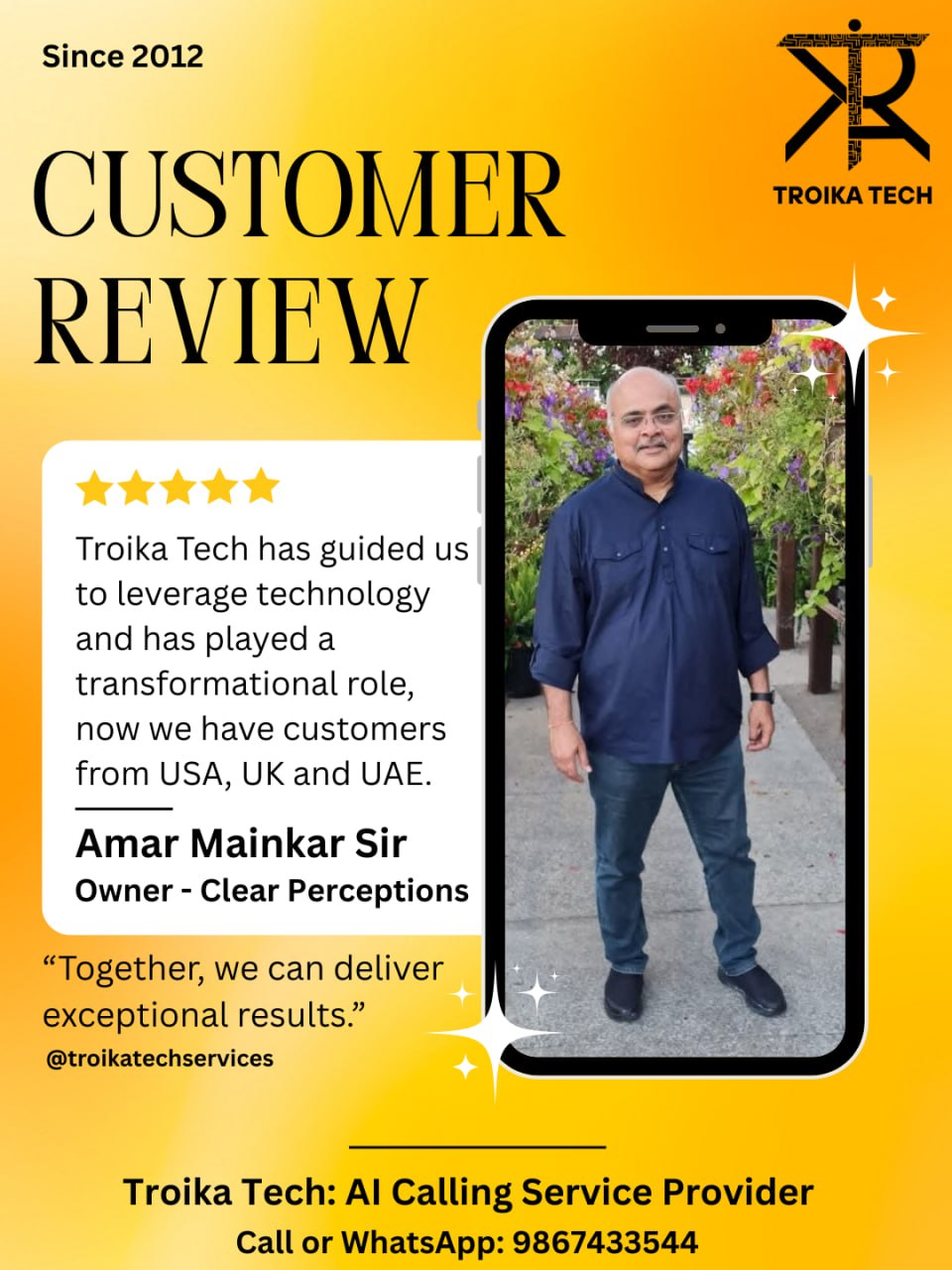
Built around execution, not just conversation
A voice AI system only creates business value when it performs a useful job reliably. Troika Tech focuses on the complete workflow surrounding the conversation.
Outcome-led design
We start with the operational problem—missed calls, repetitive enquiries, qualification delays, appointment workload, or follow-up gaps—and design the automation around the outcome you need.
Custom conversation logic
The agent can be structured around your terminology, FAQs, qualifying questions, operating rules, escalation paths, and customer journey instead of behaving like a generic call bot.
Practical integration
Where required, voice interactions can connect to business workflows so calls result in useful actions such as lead capture, routing, notifications, scheduling, or CRM-related processes.
| Capability | Business Value |
|---|---|
| Natural voice conversations | Yes |
| Lead qualification | Yes |
| Human escalation | Yes |
| Workflow automation | Yes |
| Custom business logic | Yes |
Turn repetitive calls into a structured workflow.
If your Kota business is losing time to repetitive enquiries, missed calls, manual lead qualification, or routine appointment conversations, Troika Tech can help identify which part of the process is suitable for voice AI automation.