
Phone conversations that do more than play a menu.
A voice AI agent can understand spoken customer requests, respond with approved information, collect details, and escalate conversations when human involvement is required.

What a practical agent can handle
Instead of forcing a caller through several fixed menu options, the agent can understand the reason for a call and follow the business workflow built around it.




Built for the way local customers actually call.
Ozhukarai has a mix of residential communities, clinics, educational businesses, retail outlets, professional services, and growing commercial activity around areas such as Lawspet and Reddiarpalayam. Businesses may serve customers who prefer Tamil, English, or a natural mix of both.

That makes call automation more useful when it reflects the local audience rather than treating every customer conversation as formal, single-language support.
Answer enquiries
Provide consistent responses to recurring questions about services, availability, procedures, and business information.
Capture leads
Collect caller details and relevant requirements so enquiries can become structured opportunities for follow-up.
Qualify prospects
Ask predefined questions and identify which conversations require a sales, admissions, or service-team response.
Route intelligently
Escalate conversations when the caller needs human judgement, specialised support, or a direct team member.
From first call to a working voice workflow.
Build
We design the agent around your knowledge, scripts, workflows, and escalation rules.
Test
We test realistic questions, objections, edge cases, and human handoffs.
Go Live
We connect the workflow, monitor performance, and improve it from real interactions.
Useful where phone enquiries affect daily operations.
Voice automation makes the most sense when staff repeatedly answer similar questions, miss calls while serving customers, or need to respond faster to new enquiries.
Clinics and healthcare businesses
Handle appointment requests, basic service questions, operating-hour enquiries, and call routing so reception teams can focus on patients.
Education and training businesses
Respond to course enquiries, capture prospective-student information, and route qualified prospects to admissions staff.
Automate repetition without removing human judgement.
The point is not to automate every call. The point is to let AI handle predictable conversations while people handle situations that genuinely require context, judgement, or empathy.
Where the workflow can create measurable value
- More incoming calls answered
- Faster response to new enquiries
- Structured lead information captured
- Less repetitive work for staff
- Consistent answers to routine questions
- Clear escalation to human teams
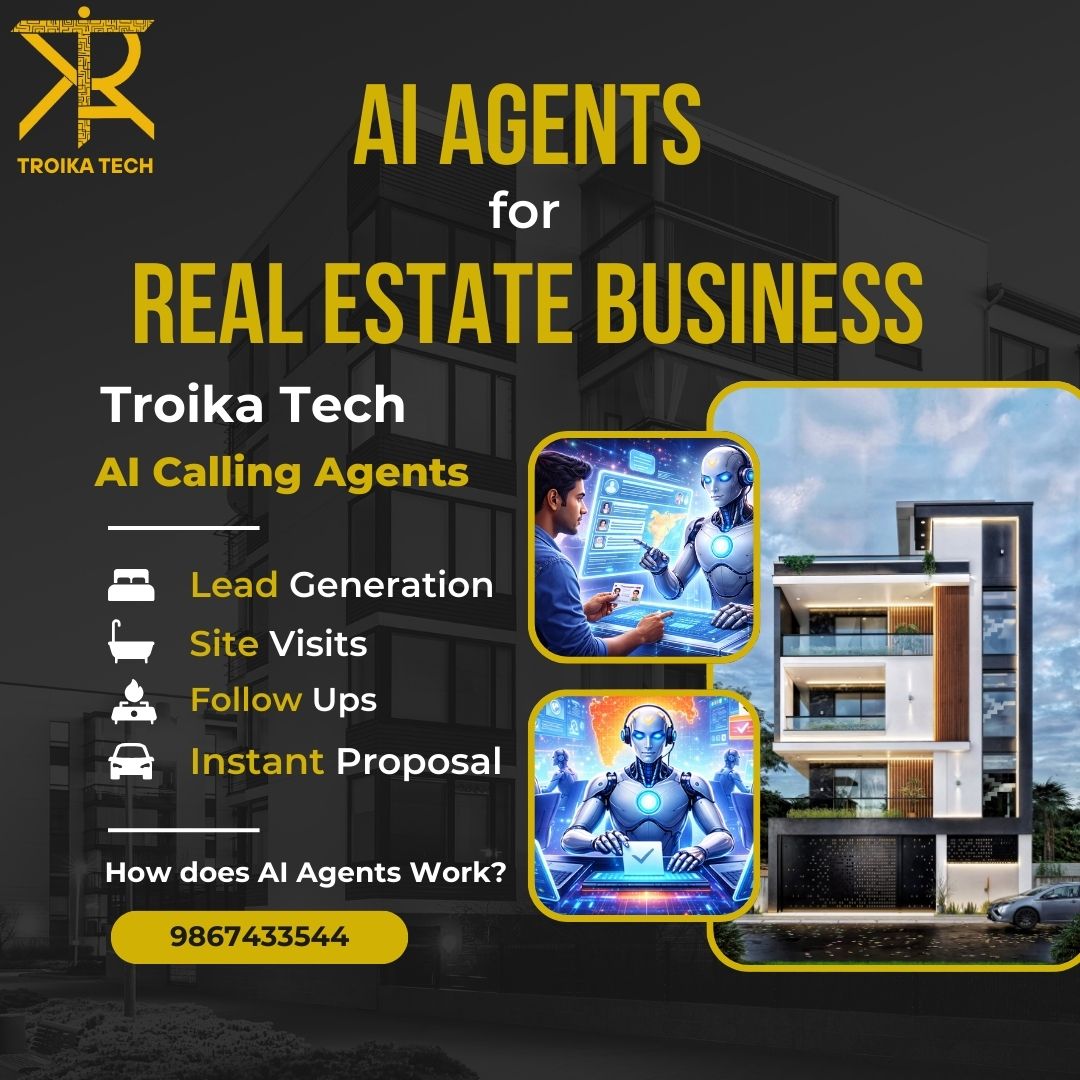
Faster lead response
New enquiries can enter a defined workflow immediately instead of waiting for an available employee.
Lower repetitive workload
Routine questions can be handled automatically, giving staff more time for complex customer needs.
Scalable operations
A structured voice workflow can expand as call volume, services, locations, and automation requirements grow.
Questions businesses ask before adopting Voice AI.
A voice AI agent is an automated system that can have spoken conversations with customers over the phone. Unlike a basic recorded IVR menu, it can understand what a caller is asking and respond according to your business rules.
For example, a customer in Ozhukarai might call a clinic to ask about appointment availability, a local service business to enquire about pricing, or an education centre to ask about a course. Instead of forcing the caller through several menu options, the AI can understand the request, provide approved information, collect relevant details, and escalate the conversation when human involvement is required.
Troika Tech can configure the agent around your actual business information rather than providing a generic conversation script. This makes the system more useful for real customer interactions.
Businesses in Ozhukarai often serve customers who expect quick answers but may call outside normal office hours or while employees are already occupied. Missed calls can mean missed enquiries, delayed appointments, or leads that move on before anyone responds.
Voice AI provides another layer of availability. It can handle repetitive calls consistently while your team concentrates on work that genuinely requires human judgement.
Local language behaviour also matters. Customers around Ozhukarai and the wider Puducherry area may naturally switch between Tamil and English during a conversation. A voice agent designed for the actual audience can be configured to support appropriate language handling rather than forcing every caller into formal English.
For businesses serving neighbourhood customers around Lawspet, Reddiarpalayam, and nearby areas, this can make automated calling feel more natural and practical.
A Voice AI agent is most useful when a business receives recurring phone enquiries, has missed calls, needs faster lead response, or spends staff time answering the same questions repeatedly.
Clinics can use it for appointment-related calls and basic information. Retailers and service providers can use it for enquiries, lead qualification, and call routing. Educational businesses can use it to capture prospective-student information before transferring qualified enquiries to an admissions team.
It can also support businesses with high call volumes, multiple locations, appointment-based services, or customers who frequently ask questions that follow predictable patterns.
The key question is not whether a business can technically use AI. The better question is whether enough repetitive phone work exists to justify automation. If employees spend significant time answering the same enquiries, voice automation may have a clear operational benefit.
The cost depends on the complexity of the agent, call volume, integrations, languages, workflows, and the amount of customisation required. A simple enquiry-handling agent is fundamentally different from a system that qualifies leads, checks business data, schedules appointments, updates a CRM, and transfers complex calls.
The value should therefore be measured against business outcomes rather than the technology alone. Useful measures include calls answered, leads captured, appointments requested, qualified enquiries transferred, response time, and staff hours saved.
For example, if employees repeatedly answer questions about opening hours, services, availability, pricing ranges, or appointment procedures, automation can reduce that repetitive workload. If the agent also captures caller information, those interactions can become structured business leads rather than simply completed phone calls.
Troika Tech focuses on building the workflow around the intended result, so the investment is tied to practical business use rather than adding AI simply because it is available.
A straightforward voice AI project can move relatively quickly, but the timeline depends on what the agent needs to do. A basic receptionist-style agent with defined FAQs and call routing requires less work than an integrated system connected to scheduling software, CRM records, internal databases, or complex business rules.
Troika Tech starts by mapping the conversations the agent needs to handle. We then define its knowledge, tone, qualification questions, escalation rules, and actions. Testing comes before launch so common customer questions and difficult scenarios are covered.
After deployment, the process should not simply stop. Real conversations reveal where callers phrase questions differently, where information is missing, or where the agent needs a better handoff. Monitoring and refinement help the system become more useful over time.
For an Ozhukarai business, the initial launch can therefore be treated as the beginning of an optimisation cycle rather than a one-time software installation.
Troika Tech approaches voice AI as a business automation project, not merely as a talking chatbot. The objective is to connect conversations with measurable operational outcomes.
We design agents around your actual customer journeys, including what information the AI can provide, what details it should collect, when it should qualify a lead, and when it must transfer the caller to a person. This reduces unnecessary automation and keeps human intervention where it adds value.
Troika Tech also focuses on practical execution: conversation design, workflow logic, testing, integrations, deployment, monitoring, and ongoing improvements. If your customers use Tamil, English, or mixed-language conversations, the interaction design can be planned around the way your audience actually communicates.
The result is a voice AI system built to fit your business processes, with a structure that can scale as call volume and automation requirements grow.
Where voice automation fits in 2026.

Businesses across service-heavy sectors continue increasing AI use for customer support, lead handling, and repetitive communication.
Recent digital adoption trends show conversational AI moving beyond text chat into phone-based customer interactions.
Many businesses use automation to extend response coverage without requiring employees to handle every routine interaction manually.
Voice automation is particularly relevant where missed calls, repetitive enquiries, appointments, and lead qualification affect operations.
Technology designed around the outcome.
Troika Tech treats voice AI as an operational system. The agent needs to understand your customers, follow your rules, work with your existing processes, and know when a person should take over.
Outcome-focused automation
We design the agent around measurable goals such as capturing leads, reducing repetitive calls, booking enquiries, qualifying prospects, or routing urgent requests.
Turn repetitive calls into a structured business workflow.
If your Ozhukarai business is losing time to repetitive calls or missing valuable enquiries, a Voice AI Agent can create a more manageable phone workflow. Start by identifying which conversations should be automated, assisted, or transferred to your team.