






Turn routine phone conversations into useful business workflows.
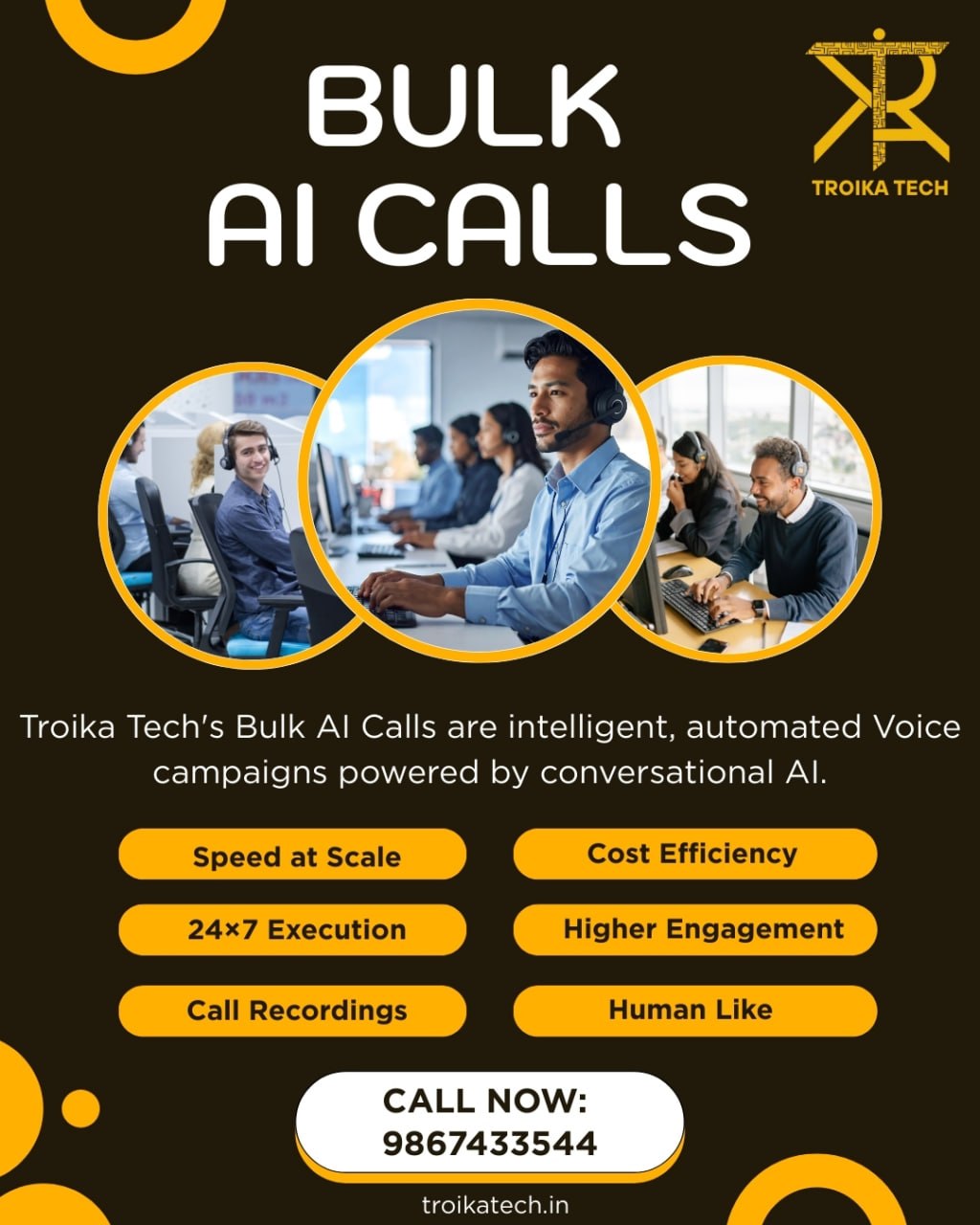
A voice AI agent is software that speaks with customers over a phone call using artificial intelligence. It listens to what the caller says, understands the intent, responds conversationally, and can perform predefined actions.
Unlike a basic IVR menu, a properly designed voice AI agent lets callers describe what they need naturally. It can answer approved questions, collect information, qualify enquiries, and transfer conversations when human involvement is required.
Built for real conversations
Troika Tech designs agents around your services, customer questions, operating rules, escalation paths, and connected systems. The goal is not to make a phone bot sound impressive. The goal is to make calls more useful.
Understands intent
Identifies what the caller actually needs instead of relying only on menu selections.

Designed for Tirupati's high-enquiry local market.
Tirupati businesses often serve pilgrims, residents, students, patients, travellers, and commercial customers. That creates different call patterns and different expectations around response speed.
Businesses around Tirumala and Tiruchanur can receive repeated questions about accommodation, transport, directions, bookings, timings, and services. Customers may also prefer Telugu, English, or Hindi depending on where they are calling from.
A voice AI agent can provide an immediate first response rather than sending every caller to voicemail or requiring an employee to repeat the same information. For a Tirupati hotel, for example, the system could answer routine accommodation questions and collect booking preferences before escalating a complicated request to staff.
Answer enquiries
Handle approved questions about services, timings, availability, location, and basic policies.
Qualify leads
Capture customer requirements and identify which enquiries deserve immediate human attention.
Route calls
Send complex or sensitive conversations to the right department or employee.
Trigger workflows
Connect conversations with scheduling, CRM, follow-up, and other approved business processes.
Three Tirupati business types with clear use cases.
Hotels, guest houses & travel
Handle room enquiries, booking questions, check-in information, transport requests, directions, and routine guest calls while staff focus on visitors already at the property.
From the first call to a production-ready agent.
Discover
Map your call types, questions, business rules, and required integrations.
Build
Configure conversation flows, knowledge, languages, and escalation logic.
Test
Run realistic scenarios and refine responses before customer-facing use.
Go Live
Connect the agent to your phone and systems, then monitor performance.
Testing matters more than simply switching the agent on.
Real customers do not always ask questions in the exact wording found in an FAQ. Troika Tech tests variations, interruptions, unclear requests, escalation cases, and business-specific terminology before deployment.
- Realistic customer conversations
- Business-specific knowledge
- Human escalation rules
- Language and terminology testing
- Workflow and integration checks
- Post-launch monitoring
Questions businesses ask before adopting voice AI.
A voice AI agent is software that speaks with customers over a phone call using artificial intelligence. It listens to what the caller says, understands the intent, responds conversationally, and can perform predefined actions.
For example, a hotel in Tirupati could use an AI voice agent to answer questions about room availability, check-in timing, location, and booking requirements. A clinic could use one to collect appointment preferences before handing the request to appropriate staff.
Tirupati businesses operate in a market where customer response speed can directly affect bookings, appointments, sales enquiries, and service satisfaction. The city also receives visitors with different language preferences, particularly around pilgrimage and hospitality services.
The scale of visitor activity makes missed calls particularly costly for businesses dependent on enquiries. A voice AI agent can provide an immediate first response instead of sending every caller to voicemail or leaving employees to answer repetitive questions manually.
A voice AI agent is most useful for businesses receiving frequent or repetitive phone enquiries. That includes hotels, restaurants, hospitals, diagnostic centres, educational institutions, travel operators, real-estate businesses, retailers, manufacturers, and professional service companies.
It becomes particularly valuable when employees spend substantial time answering the same questions, when calls arrive outside business hours, or when leads are lost because nobody answers quickly.
The cost depends on the number of calls, conversation complexity, languages, integrations, call duration, security requirements, and whether the agent needs to perform actions such as appointment scheduling or CRM updates.
The better way to measure value is not simply the monthly software cost. Businesses should consider missed calls, employee time spent on repetitive enquiries, lead response speed, and the number of customers who abandon enquiries because they cannot reach someone.
A straightforward voice AI agent can move from discovery to deployment relatively quickly, while more advanced implementations take longer because they require integrations, extensive testing, multiple departments, or complex business rules.
Troika Tech starts by identifying the calls the AI should handle and the calls it should never handle independently. We then create the conversation logic, connect relevant systems where required, test realistic scenarios, and refine responses before going live.
Troika Tech approaches voice AI as a business automation project, not simply as a phone bot. We first understand your customer journey, call volume, internal processes, and escalation requirements before deciding what should be automated.
Our approach combines conversational AI, workflow automation, system integration, and practical deployment. That allows the agent to do more than answer FAQs: it can qualify enquiries, collect structured information, trigger workflows, and hand conversations to employees when human involvement is necessary.
Why the local market makes call automation relevant.
Tirupati combines a large visitor economy with established commercial, industrial, healthcare, education, and service activity. That mix creates many situations where businesses need to respond to enquiries quickly and consistently.
Registered micro, small, and medium enterprises reported by the Tirupati district administration.
Large and mega industries reported across sectors including engineering, food processing, pharmaceuticals, textiles, and electronics.
Darshan visitors were reported on several individual days in early September 2026.
These figures are industry context, not a promise of performance. The practical business case for voice AI depends on your own call volume, staff workload, customer journey, and automation requirements.
Technology is useful only when it improves the operation.
Built around outcomes
Troika Tech starts with the calls you need to automate, the problems causing lost time or missed opportunities, and the measurable result you want from the system.
| Capability | Practical business value | Troika Tech approach |
|---|---|---|
| Call answering | Fewer unanswered routine enquiries | Configured around approved information |
| Lead qualification | More structured sales information | Built around your qualification rules |
| Workflow automation | Less repetitive manual work | Connected to relevant processes |
| Human escalation | Complex cases reach the right people | Defined before launch |
Build a voice AI workflow that fits your business.
Start with the calls that consume the most staff time or create the most missed opportunities. Troika Tech can map the use case, define the automation, and build a practical path toward deployment.
Plan your voice AI use case